


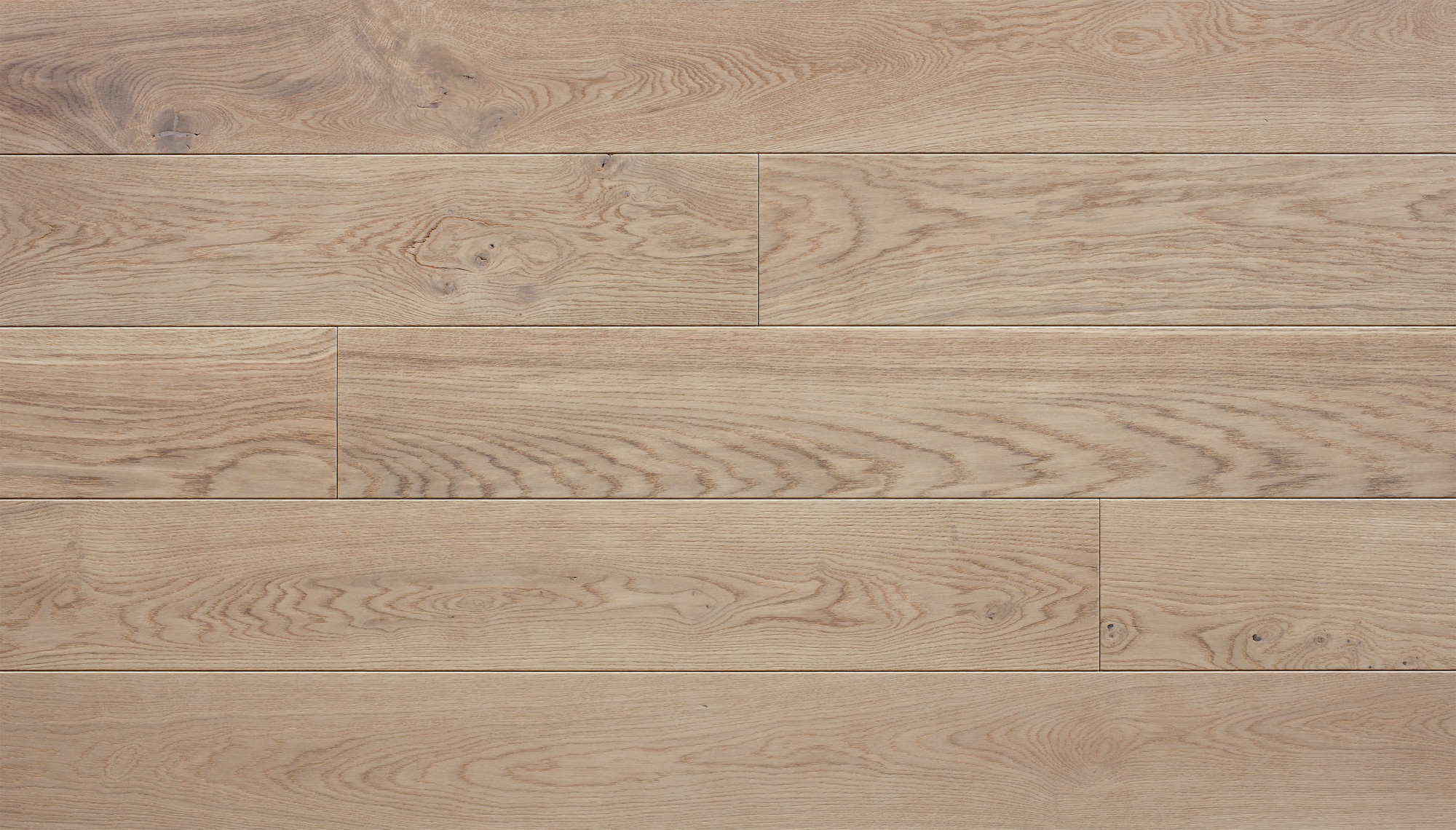
Homeowners across St. Louis, MO, University City, MO, Richmond Heights, MO, Jennings, MO, East St. Louis, IL bring this to Just Around the Corner Flooring fairly regularly, usually describing the surface of the floor coming away in a thin sheet or flaking off in a patch. It is easy to lump this in with laminate peeling at the edges, but the two have genuinely different mechanisms, and treating one like the other sends you toward the wrong repair.
What The Top Layer Actually Is
Laminate is a pressed sandwich rather than a solid material. The wood grain you see is a printed decor paper, and sitting above it is a clear melamine wear layer that does the actual work of resisting scratches and traffic. Those layers are bonded to the fiberboard core under high heat and pressure in a process that cures the resin rather than gluing the parts together.
That distinction matters a great deal once something goes wrong. A cured bond of this type is not something that can be softened and reset later. When the wear layer separates from the decor paper beneath it, there is no adhesive sitting there waiting to be reactivated, which is why the repair options are narrower than most homeowners expect them to be.
Why This Is Not The Same As Edge Peeling
Edge peeling starts at the seam between two planks and works inward. It is usually driven by moisture reaching the core at the joint, which swells the fiberboard and lifts the edges upward. The damage stays concentrated along the plank perimeter, and the middle of each board often looks untouched.
Top layer separation starts on the face of the plank, frequently in the middle, and can appear on a board whose edges are completely intact. That difference points an investigation in a different direction entirely, toward heat, surface moisture or the product itself rather than toward joints, seam sealing and subfloor moisture.
What The Pattern Across The Room Tells You
Where the damage appears is the most useful diagnostic information available, and it is worth walking the whole room before settling on a cause.
One isolated patch near a heat register, a radiator or a sun exposed window points toward concentrated heat
Damage in a kitchen, laundry area or near a dishwasher points toward steam and repeated surface moisture
Scattered spots on planks with no shared heat or water source points toward the product or the batch
A broad dull or lifting area following traffic paths points toward cleaning method rather than a single event
This matters because the response differs in each case. A heat driven patch can often be resolved by addressing the source and replacing the affected boards. Damage turning up across unrelated areas of the same room is a different conversation, and one worth raising with whoever supplied and installed the floor while any coverage may still apply.
Why Steam Mops Come Up So Often
Steam cleaning combines the two things a laminate wear layer handles least well, which are heat and moisture, and it delivers them together under pressure. Steam drives into the seams and sits against the surface at a temperature the bond was never designed to meet over and over again.
This is why a number of laminate manufacturers specifically exclude steam cleaning from their care instructions, and some treat it as grounds for declining a warranty claim. It is worth reading the care guidance for your particular product rather than assuming that a mop marketed as laminate safe is acceptable for it, because what manufacturers allow varies more than the packaging suggests.
Why It Cannot Simply Be Glued Back Down
Because the original bond was formed by heat and pressure during manufacturing rather than by adhesive, there is no practical way to recreate it in a finished room. Surface adhesives and fillers may hold briefly, but they are sitting on top of a layer that is already failing, and the repair usually looks worse than the original damage within a fairly short time.
The realistic fix is replacing the affected planks. Floating laminate has a real advantage here, since boards can often be lifted and swapped without disturbing the entire floor, particularly when the damage sits near a wall or when spare material from the original order was kept. Whether a matching plank is still available depends on the specific product and how long ago it was discontinued.
If the surface of your laminate is lifting or flaking anywhere in St. Louis, MO, University City, MO, Richmond Heights, MO, Jennings, MO, East St. Louis, IL, Just Around the Corner Flooring can look at the pattern with you and help work out whether you are dealing with a source problem or a product problem. Visit us at Crestwood, MO or contact us to have it looked at, and browse our full laminate flooring options if replacement turns out to be the right move.


